


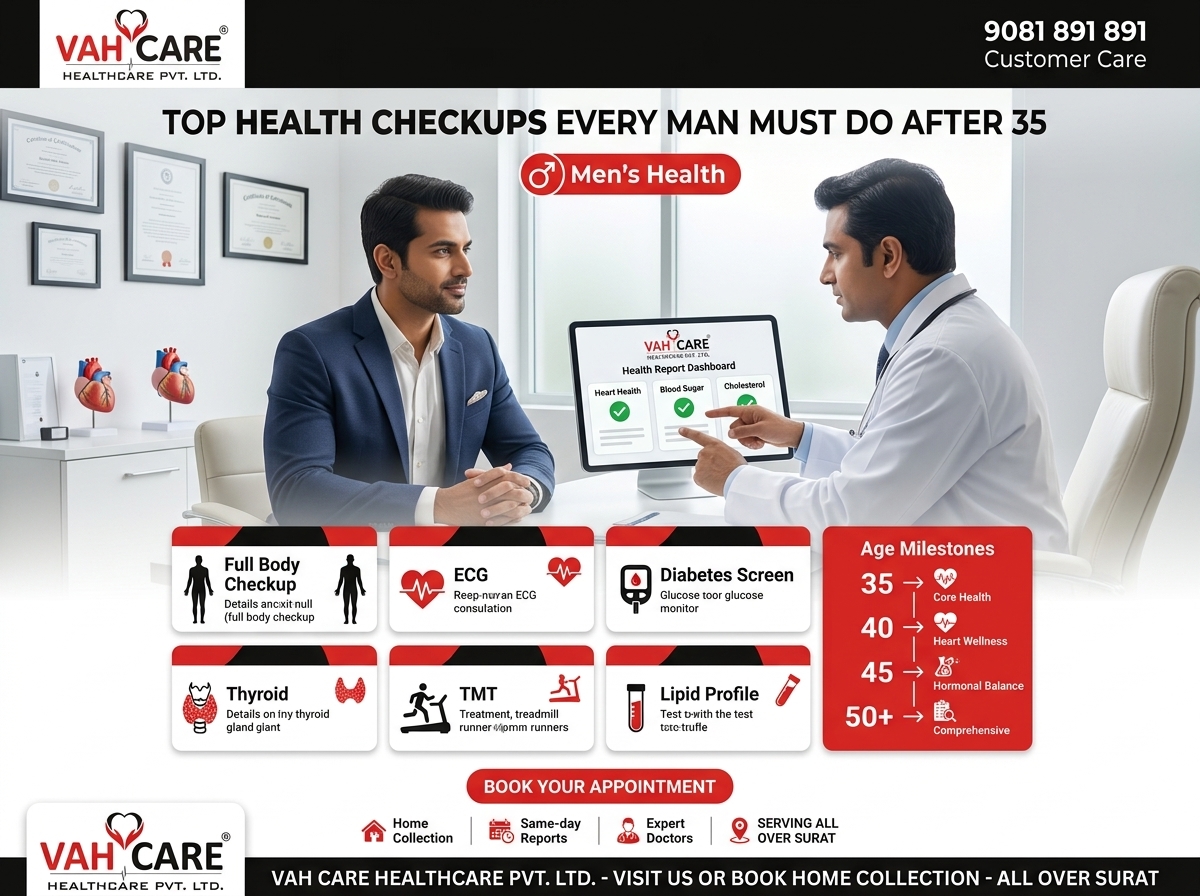
Why Men Over 35 Are at Higher Risk Than They Realise
There is a well-documented phenomenon in healthcare: men avoid doctors. Studies consistently show that Indian men are significantly less likely than women to seek medical attention proactively, less likely to discuss health concerns openly, and far more likely to dismiss early warning signs as stress, fatigue, or ageing.
This cultural tendency carries a steep price. By the time many Indian men receive a diagnosis — diabetes, hypertension, cardiac disease, or cancer — the condition has been silently progressing for years. Treatment at this stage is longer, more complex, more expensive, and associated with far worse outcomes than if the same condition had been caught early through a routine preventive health checkup.
The age of 35 is a critical inflection point. After this age, metabolic changes, hormonal shifts, accumulated lifestyle choices, and genetic predispositions begin converging — quietly but meaningfully — to create conditions that will define a man's health in his 40s, 50s, and beyond.
At Vahcare Healthcare Pvt. Ltd., Surat, we offer comprehensive men's health checkup packages with home sample collection, same-day reports, and expert doctor consultation — making preventive care as accessible as possible for every working man in Surat. This guide is your complete, age-specific roadmap to the health checkups every Indian man must prioritise after 35.
Why 35 Is the Age That Changes Everything
Before 35, the body has a remarkable capacity for self-correction. Poor diet, irregular sleep, and limited exercise may cause fatigue and minor metabolic inefficiencies, but the underlying systems remain resilient. After 35, this resilience begins to erode — not suddenly, but progressively:
Metabolic rate declines by approximately 1–2% per year after 35, meaning the same diet that maintained a healthy weight at 28 begins contributing to weight gain without any change in eating habits.
Testosterone levels begin a gradual but meaningful decline — approximately 1–2% per year — affecting energy, muscle mass, mood, libido, and metabolic function.
Cardiovascular risk increases sharply. The decade between 35 and 45 sees the steepest rise in first-time cardiac events among Indian men, driven by years of accumulated risk factors.
Insulin sensitivity declines, elevating the risk of pre-diabetes and Type 2 diabetes even in men who are not overweight.
Blood pressure tends to rise with age, stress, and dietary sodium. Hypertension before 45 is no longer unusual among Indian urban professionals.
These changes are not inevitable in their consequences — but they are inevitable in their onset. The question is not whether these changes will occur, but whether they will be caught and managed early enough to prevent serious disease. That is precisely the purpose of a preventive health checkup.
Causes: What Drives Poor Health in Indian Men After 35
Understanding the root causes of deteriorating health in middle-aged Indian men helps identify the specific risks each individual should screen for:
1. Professional Stress and Cortisol Overload
For most Indian men in their 35–50 age bracket, professional pressure peaks in this decade — business growth, EMI commitments, family responsibilities, and career advancement compete simultaneously. Chronic psychological stress triggers sustained elevation of cortisol, which raises blood glucose, increases blood pressure, promotes abdominal fat accumulation, disrupts sleep, and suppresses immune function. This multi-system impact is one of the most significant, and most underappreciated, health risks for men in this age group.
2. Physical Inactivity
After 35, family and professional commitments typically displace physical activity. The regular cricket, cycling, or gym routine of a man's 20s gives way to long workdays, commutes, evening meals, and screen time. Sustained physical inactivity accelerates metabolic decline, cardiovascular risk, and musculoskeletal degeneration simultaneously.
3. Dietary Deterioration
Business lunches, client dinners, irregular meal timing, frequent restaurant meals, and the convenience of processed and packaged foods combine to create a dietary pattern high in refined carbohydrates, saturated fat, sodium, and added sugar — and low in fibre, micronutrients, and protein. This pattern is the single largest nutritional contributor to metabolic disease in Indian professional men.
4. Tobacco and Alcohol Use
Both tobacco use and heavy alcohol consumption remain more prevalent among Indian men than women. These substances contribute directly to cardiovascular disease, hypertension, liver damage, cancer risk, and metabolic dysfunction. Their cumulative effects become particularly pronounced in the decade after 35.
5. Disrupted Sleep
Night shifts, late-night screen use, anxiety-driven insomnia, and undiagnosed sleep apnoea are increasingly common among Indian men in urban settings. Chronic sleep deprivation impairs glucose metabolism, raises blood pressure, elevates inflammatory markers, and accelerates cardiovascular ageing.
6. Unmanaged Existing Conditions
Many men carry risk conditions — hypertension, high cholesterol, borderline diabetes — that were either never diagnosed or were diagnosed and not consistently managed. Without regular blood tests and health checkups, these conditions progress silently and compound one another.
7. Family History Going Unacknowledged
Genetic risk is significant but often overlooked. A father or uncle who had a heart attack at 50 is a powerful predictor of personal cardiac risk — yet many men do not connect their family history to their own health strategy.
Warning Signs Men Over 35 Should Never Ignore
The body does send signals — but many men dismiss or rationalise them away. Take these symptoms seriously enough to book a blood test and health checkup:
Cardiovascular signals:
- Chest discomfort, tightness, or pressure — even briefly
- Shortness of breath with mild exertion (climbing stairs, brisk walking)
- Heart palpitations or irregular heartbeat
- Unexplained sweating, especially at rest
- Pain or discomfort in the left arm, jaw, neck, or back
Metabolic signals:
- Persistent fatigue that sleep does not resolve
- Unexplained weight gain, especially around the abdomen
- Increased thirst or frequent urination
- Blurred vision or difficulty focusing
- Slow healing of minor cuts or skin infections
Hormonal and neurological signals:
- Reduced motivation, concentration difficulty, or low mood
- Decreased libido or sexual function
- Tingling or numbness in hands or feet
- Hair thinning or loss beyond normal patterns
- Cold intolerance, constipation, or dry skin (thyroid signals)
Urological signals (critical after 40):
- Difficulty initiating urination or weak urine stream
- Frequent night-time urination
- Incomplete bladder emptying
If you experience any of these, do not self-diagnose or self-medicate. Book a comprehensive blood test at home through Vahcare's home sample collection service in Surat, and let the reports guide the next steps.
Key Risk Factors: Assessing Your Personal Profile
| Risk Factor | Why It Matters for Men After 35 |
|---|---|
| Age 35–45 | Peak decade for first cardiac events in Indian men |
| Abdominal obesity (waist > 90 cm) | Strongest single predictor of metabolic syndrome |
| Family history of heart disease or diabetes | 3–6× elevated risk |
| Tobacco use (current or past) | 2–4× cardiac and cancer risk increase |
| Hypertension (even borderline) | Silent artery damage; stroke and heart attack precursor |
| High LDL / triglycerides | Accelerates coronary artery disease |
| Pre-diabetes or diabetes | Direct cardiac, kidney, nerve, and eye damage |
| Sedentary lifestyle | Compounds every other risk factor |
| Chronic sleep deprivation | Independent cardiac and metabolic risk factor |
| High-stress profession | Cortisol-driven damage across multiple systems |
| Post-COVID recovery | Elevated cardiac inflammation and clotting risk |
The Complete Men's Health Checkup Guide After 35
Below is Vahcare's age-specific, clinically grounded guide to the health tests every Indian man should prioritise — arranged by type and urgency.
1. Full Body Checkup — The Foundation
A comprehensive full body checkup in Surat is the non-negotiable starting point for any man over 35. Rather than booking individual tests piecemeal, a full body checkup packages all essential investigations into one appointment — with a single blood draw, at your home, and a complete picture of your health delivered by evening.
Vahcare's Men's Health Checkup includes CBC, lipid profile, liver and kidney function, blood sugar panel, thyroid function, vitamin levels, urine analysis, and more — giving your doctor a comprehensive baseline to assess risk, detect abnormalities, and guide personalised recommendations.
Frequency: Once a year for all men over 35. Every six months if you have risk factors.
2. Cardiac Risk Assessment — ECG and TMT Test
Cardiovascular disease is the leading cause of death in Indian men, and the risk begins building silently long before a cardiac event occurs. Two tests form the core of cardiac screening for men over 35:
ECG Test (Electrocardiogram) Records the electrical activity of your heart, detecting rhythm abnormalities, prior silent heart attacks, and early signs of coronary artery disease. Vahcare offers an ECG test at home across all of Surat — a trained professional arrives with clinical-grade equipment, the test takes under 10 minutes, and results are reviewed by a doctor the same day.
Every man over 35 should have a resting ECG as part of his annual preventive health checkup. It is non-invasive, completely painless, and provides irreplaceable baseline information.
TMT Test (Treadmill / Stress Test) While a resting ECG is essential, it can miss exercise-induced cardiac abnormalities. The TMT test pushes the heart under controlled physical stress on a treadmill, revealing blockages and rhythm problems that only emerge during exertion. Men over 40 with any cardiac risk factors — family history, hypertension, diabetes, smoking, or borderline ECG findings — should discuss a TMT test with their doctor.
Frequency: ECG annually from age 35. TMT as recommended by your doctor, typically from age 40 or earlier if risk factors are present.
3. Diabetes Screening — Blood Sugar and HbA1c
India leads the world in the number of diabetic patients — over 101 million — and Indian men are particularly vulnerable due to genetic predisposition to insulin resistance. The treacherous aspect of early diabetes is its complete absence of symptoms.
Fasting Blood Glucose measures blood sugar after an overnight fast. Elevated levels suggest impaired glucose regulation.
HbA1c — the gold standard for diabetes screening — reflects average blood sugar over the past three months, making it far more reliable than a single-point glucose reading. An HbA1c between 5.7% and 6.4% indicates pre-diabetes; 6.5% and above confirms diabetes.
Post-Prandial Blood Glucose (PPBG) measured two hours after a meal detects glucose intolerance that may be missed on fasting tests alone.
Vahcare's blood test at home service in Surat collects the sample at your doorstep, processes it at a certified laboratory, and delivers the diabetes panel results with same-day reports and a doctor consultation to explain what they mean.
Frequency: Annually from age 35. Every 6 months if pre-diabetic or with strong family history.
4. Lipid Profile — Cholesterol and Triglycerides
The lipid profile measures total cholesterol, LDL ("bad") cholesterol, HDL ("good") cholesterol, and triglycerides. Abnormal lipid levels — particularly elevated LDL and triglycerides combined with low HDL — are among the most powerful predictors of coronary artery disease.
Indian men disproportionately present with a specific lipid pattern: moderately elevated LDL, very high triglycerides, and very low HDL — a combination that carries high cardiac risk even when total cholesterol appears unremarkable. This pattern frequently goes undetected without a full lipid panel.
Dietary habits, physical inactivity, alcohol consumption, and underlying metabolic conditions all drive lipid abnormalities. Early detection allows for targeted dietary intervention and, where needed, medical management before arterial damage becomes irreversible.
Frequency: Annually. Every 6 months if abnormal values are detected.
5. Thyroid Test — Not Just a Women's Concern
A common misconception: thyroid disease is not just a women's health issue. While hypothyroidism and hyperthyroidism are more prevalent in women, Indian men develop thyroid disorders at significant rates — and because the symptoms overlap with stress, ageing, and fatigue, thyroid dysfunction in men is frequently missed or misattributed.
An underactive thyroid (hypothyroidism) causes fatigue, weight gain, depression, cognitive slowing, elevated cholesterol, and reduced libido — all symptoms many men attribute to "just getting older." Left untreated, hypothyroidism substantially increases cardiovascular risk.
The thyroid test — measuring TSH, T3, and T4 — is a simple blood test included in Vahcare's comprehensive health checkup panels. It provides a complete picture of thyroid status in minutes.
Frequency: Every 2 years from age 35 as a baseline. Annually if symptoms suggest thyroid dysfunction or if a family history of thyroid disease exists.
6. Blood Pressure Monitoring — The Silent Killer
Hypertension affects an estimated 30% of Indian adults — and a significant proportion of those affected do not know it. Blood pressure above 130/80 mmHg is defined as hypertension by current guidelines. Between 120/80 and 129/80 is elevated. Neither typically causes symptoms.
Over years, uncontrolled hypertension silently damages arteries throughout the body, dramatically increasing the risk of heart attack, stroke, kidney failure, and vision loss. For Indian men, who are less likely than women to attend routine medical checkups, hypertension is one of the most common undetected conditions driving premature death.
Blood pressure measurement is included in all Vahcare health checkup packages — a simple, non-invasive reading that takes under a minute and provides critical information.
Frequency: At every health checkup, minimum once a year. Home blood pressure monitors (widely available in Surat) allow more frequent self-monitoring.
7. Kidney Function Tests
The kidneys are among the organs most silently damaged by hypertension and diabetes — yet kidney disease rarely causes symptoms until 70–80% of function has already been lost. By that stage, treatment options are severely limited.
Creatinine and eGFR (estimated glomerular filtration rate) assess how well the kidneys are filtering waste from the blood. Urine microalbumin detects microscopic traces of protein in the urine — the earliest sign of diabetic kidney disease, often present a decade before kidney function measurably declines.
These tests are included in Vahcare's comprehensive blood test panels, available through home sample collection in Surat.
Frequency: Annually. More frequently if diabetic or hypertensive.
8. Liver Function Tests
The liver metabolises medications, alcohol, dietary fat, and toxins. Non-alcoholic fatty liver disease (NAFLD) — a condition strongly associated with obesity, diabetes, and high-carbohydrate diets — now affects an estimated 25–30% of urban Indian adults and is rising sharply. NAFLD progresses silently to fatty liver, inflammation, fibrosis, and ultimately cirrhosis or liver cancer in some patients.
Liver function tests — ALT, AST, bilirubin, and albumin — detect early liver stress and abnormality, prompting lifestyle intervention before irreversible damage accumulates.
Men who consume alcohol regularly, are overweight, or have metabolic syndrome should prioritise liver function tests at every annual checkup.
Frequency: Annually.
9. Vitamin D and Vitamin B12 — The Hidden Deficiencies
Despite living in one of the sunniest countries in the world, Vitamin D deficiency affects over 70% of urban Indians. In men, Vitamin D deficiency contributes to bone loss, muscle weakness, reduced testosterone production, immune impairment, and elevated cardiovascular risk.
Vitamin B12 deficiency is particularly common in vegetarian Indian men and those who consume alcohol. Low B12 causes nerve damage (peripheral neuropathy), cognitive impairment, fatigue, and megaloblastic anaemia. Symptoms often develop gradually and are mistaken for ageing or stress.
Both deficiencies are correctable — but only if detected. A simple blood test identifies levels precisely and guides supplementation.
Frequency: Every 1–2 years, or annually if a previous deficiency has been identified.
10. HIV Test and STI Screening — Breaking the Stigma
The HIV test is a standard component of comprehensive preventive healthcare for sexually active adults — men included. HIV infection significantly increases cardiovascular risk, immune vulnerability, and long-term morbidity. With modern antiretroviral therapy, HIV is a manageable chronic condition when detected early.
There is no medical or social justification for avoiding this test. It is confidential, simple, and part of responsible health awareness for any adult. Vahcare includes HIV testing as part of comprehensive preventive screening panels.
Frequency: As part of comprehensive annual health screening.
Age-Specific Screening Milestones for Indian Men
Age 35 — Establish Your Baseline Full body checkup with CBC, lipid profile, fasting glucose, HbA1c, thyroid panel (TSH), kidney and liver function, blood pressure, ECG, Vitamin D and B12. This baseline is the reference point against which all future tests are compared.
Age 40 — Cardiac Focus All of the above, plus a TMT stress test if indicated, PSA (prostate-specific antigen) first baseline reading, and a deeper review of blood pressure and cardiac risk factors. Men with risk factors should discuss aspirin therapy with their physician.
Age 45 — Full Metabolic and Cancer Awareness All of the above, plus PSA monitoring, colonoscopy discussion if family history of colorectal cancer exists, and comprehensive metabolic syndrome evaluation. Men on any ongoing medication should have a comprehensive medication review.
Age 50 and Above — Bi-Annual Screening All major panels every six months. Cardiac stress testing annually. PSA and urological assessment. Bone density evaluation if risk factors for osteoporosis are present (low physical activity, low Vitamin D, steroid use history). Annual ophthalmological review.
Prevention Tips: Staying Ahead of the Curve
1. Book your annual full body checkup — without excuses. Schedule it the way you schedule a vehicle service. Your body deserves at least the same maintenance discipline as your car.
2. Know your five numbers. Blood pressure, fasting glucose, HbA1c, LDL cholesterol, and waist circumference. These five values define your metabolic health more accurately than any symptom-based self-assessment.
3. Make physical activity non-negotiable. A minimum of 150 minutes of moderate exercise per week — brisk walking, cycling, swimming, or resistance training. This single habit reduces the risk of every major chronic disease simultaneously.
4. Redesign your plate. Reduce refined carbohydrates, fried foods, and processed snacks. Increase vegetables, legumes, whole grains, and lean protein. The Indian diet, in its traditional form, was far healthier than its modern, urban incarnation.
5. Quit tobacco. Limit alcohol. If you smoke, quitting is the single most impactful health action you can take — at any age. If you drink, limiting intake to moderate levels significantly reduces liver, cardiac, and cancer risk.
6. Protect your sleep. Prioritise 7–8 hours of quality sleep. Investigate snoring — it may indicate obstructive sleep apnoea, which is both underdiagnosed and directly tied to hypertension and cardiac risk.
7. Manage stress — actively, not passively. Yoga, pranayama, meditation, regular exercise, adequate sleep, and maintaining social connections are all evidence-based stress management tools. Unmanaged chronic stress is as dangerous as smoking.
Lifestyle Changes: A Men's Health Daily Blueprint
Morning (6:00 – 9:00 AM)
- Wake at a consistent time; avoid snoozing (disrupts cortisol rhythm)
- 20–30 minute brisk walk or workout before breakfast
- Protein-rich breakfast: eggs, sprouts, paneer, or Greek yogurt with oats
- No sugary tea or breakfast biscuits as the first meal
Work Hours (9:00 AM – 6:00 PM)
- Stand or stretch every 45–60 minutes — set a phone alarm if needed
- Carry home-cooked lunch at least 4 days a week
- Choose water, buttermilk, or nimbu pani over packaged juices or soft drinks
- Use the stairs; walk during short phone calls
Evening (6:00 – 10:00 PM)
- Exercise at this time if mornings are impossible — even 30 minutes of walking counts
- Dinner before 8 PM; light and balanced
- No screens for 30–45 minutes before bed
- Review how your body felt during the day — note unusual fatigue, discomfort, or stress
Weekly Health Habits
- Weigh yourself every Sunday morning
- Check blood pressure if you have a home monitor
- Plan and pre-cook healthy meals for the week ahead
- Schedule your annual preventive health checkup — don't let it drift
Frequently Asked Questions (FAQs)
Q1. I feel perfectly healthy. Do I still need a full body checkup after 35? Yes — and this is the most important reason to get one. The conditions most likely to harm or kill Indian men over 35 — hypertension, diabetes, high cholesterol, and early cardiac disease — produce no symptoms in their early and most treatable stages. Feeling healthy is not evidence of being healthy.
Q2. What is included in Vahcare's Men's Health Checkup package in Surat? Vahcare's men's health checkup includes CBC, lipid profile, blood sugar panel (fasting glucose, HbA1c, PPBG), thyroid function (TSH, T3, T4), liver and kidney function, urine routine, Vitamin D and B12, blood pressure measurement, and ECG test — all through home sample collection with same-day digital reports and a doctor consultation. Contact Vahcare at 9081 891 891 for current package details.
Q3. Can I book a blood test at home in Surat for individual tests? Yes. Vahcare's home sample collection service in Surat allows individual test booking as well as full panel packages. A trained phlebotomist comes to your home at your preferred time, the sample is processed at a certified laboratory, and results are delivered digitally with same-day reports.
Q4. At what age should I start a TMT (stress test) in Surat? A TMT test is typically recommended from age 40 onwards, or earlier if you have risk factors such as family history of heart disease, diabetes, hypertension, smoking, or abnormal resting ECG findings. Discuss your individual suitability with a Vahcare doctor.
Q5. Is the thyroid test necessary for men? Absolutely. While thyroid disorders are more common in women, men develop them too — particularly hypothyroidism, which causes fatigue, weight gain, elevated cholesterol, and reduced libido. Symptoms are easily mistaken for stress or ageing, making a thyroid test important for accurate diagnosis.
Q6. How do I prepare for a full body checkup with home sample collection? Fast for 8–12 hours before the appointment (water is fine). Avoid strenuous exercise the evening before. Take your usual medications unless instructed otherwise by your doctor. The Vahcare team will confirm all preparation instructions when you book.
Q7. Is Vahcare's home sample collection service available across all of Surat? Yes. Vahcare Healthcare Pvt. Ltd. operates across all areas of Surat, Gujarat, providing home sample collection for blood tests, ECG tests, and comprehensive health checkups. Call 9081 891 891 to confirm coverage for your specific location.
Q8. How often should men over 35 get a preventive health checkup? Once a year for men with no significant risk factors. Every 6 months for men with hypertension, diabetes, obesity, a family history of cardiac disease, or other identified risk conditions. Your Vahcare doctor consultant will provide a personalised recommended schedule based on your results.
Conclusion: Your Health Is Your Most Valuable Asset — Protect It Actively
The Indian man's relationship with preventive healthcare needs to change — and that change starts with a single decision: to get checked before something goes wrong, not after.
After 35, your body begins keeping score. Every year without a health checkup is a year in which silent hypertension can damage your arteries, undetected diabetes can harm your kidneys, rising cholesterol can narrow your coronary vessels, and an easily correctable vitamin deficiency can quietly impair your nerves and heart.
None of this is inevitable. All of it is detectable. And most of it is manageable — if caught early.
Vahcare Healthcare Pvt. Ltd., Surat is built for exactly this purpose. Our Men's Health Checkup packages bring clinical-quality full body checkups, blood tests at home, ECG tests, TMT tests, thyroid tests, diabetes screening, and vitamin panels to your doorstep across all of Surat — with same-day digital reports, doctor consultation included, and a team that treats your health as the priority it deserves to be.
Don't wait for a symptom that may never arrive before the damage is done. Book your full body checkup in Surat today.
Because the strongest thing a man can do is take care of his health.
📞 Call 9081 891 891 — Vahcare Healthcare Pvt. Ltd. All Over Surat | Home Sample Collection | Same Day Reports | Doctor Consultation Included