

Why 30 Is the Year to Start Taking Preventive Health Seriously
In India, women's health has long been treated as a secondary priority — both by the healthcare system and, more often than we like to admit, by women themselves. A woman in her 30s in Surat is typically managing a career, a household, children, and often ageing parents simultaneously. In the midst of this, her own health is the last item on the list.
This is not a personal failing. It is a cultural pattern — and it carries serious medical consequences.
The decade between 30 and 40 is biologically significant for women in ways that are not always understood. This is when thyroid disorders most commonly emerge. When iron deficiency anaemia — the world's most prevalent nutritional deficiency — becomes most clinically impactful in women of reproductive age. When polycystic ovary syndrome (PCOS), often first suspected in the 20s, begins producing metabolic consequences that require proactive management. When cardiovascular risk, long thought of as a men's health issue, starts building its foundation in women through rising blood pressure and cholesterol. When the window for highest-impact preventive intervention is wide open — if only it is used.
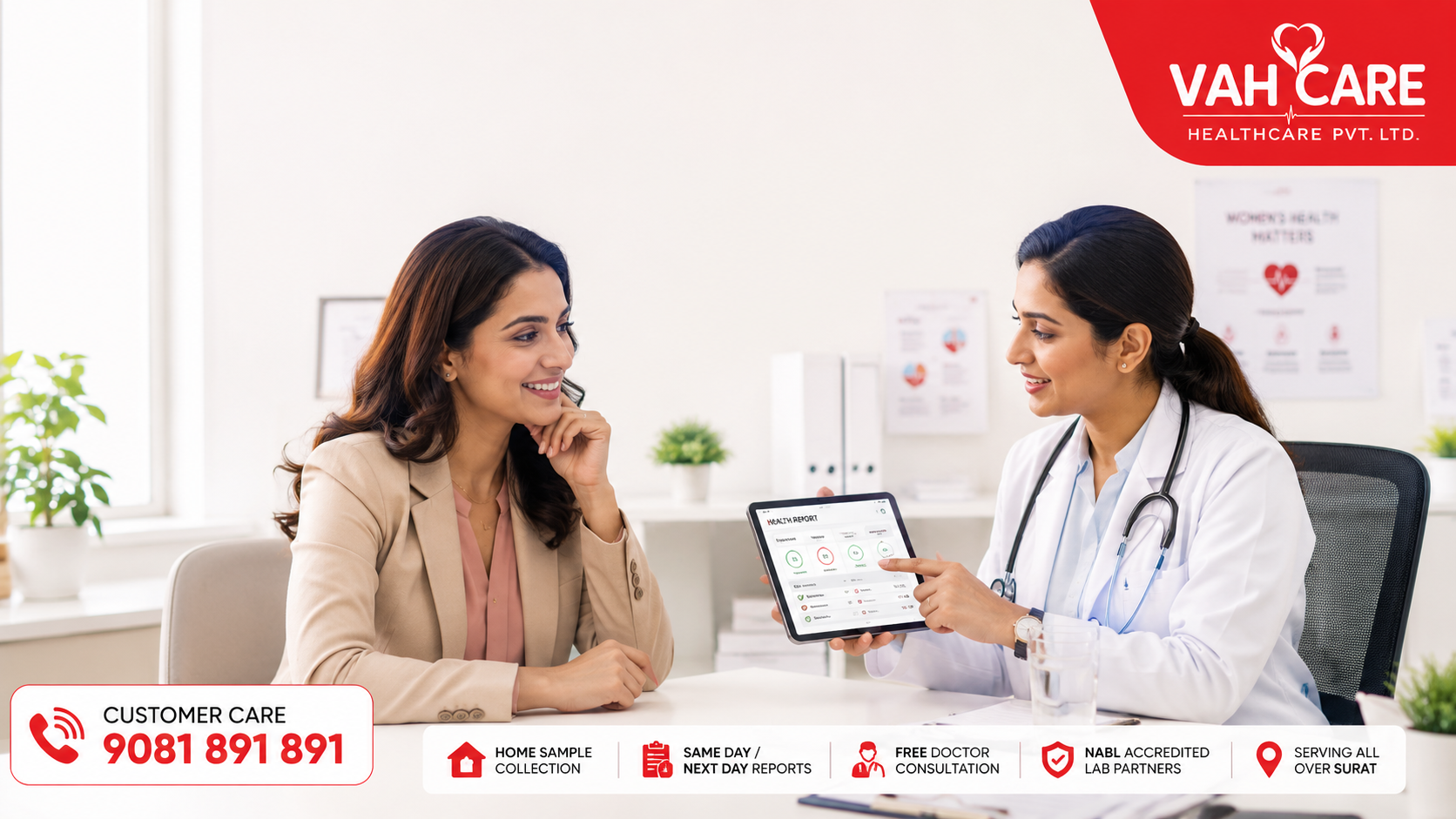
At Vahcare Healthcare Pvt. Ltd., Surat, we offer a dedicated Women's Health Checkup with home sample collection across all of Surat, same-day reports, and a doctor consultation included in every package. This guide is the complete roadmap every Indian woman over 30 needs — covering what to test, why it matters, what symptoms to watch for, and how a simple, at-home preventive health checkup can change the trajectory of your health for decades.
Why Women's Health After 30 Demands Special Attention
Women's physiology changes significantly across their reproductive years, perimenopause, and menopause — creating a distinct health risk profile that differs meaningfully from men's:
Hormonal complexity: Women's hormonal systems — regulating reproduction, thyroid function, insulin sensitivity, bone density, and mood — are far more intricate and interconnected than commonly recognised. A disruption in one hormonal axis frequently cascades into others, creating multi-system effects that are easily misattributed to stress or lifestyle.
Nutritional vulnerability: Menstruation, pregnancy, and lactation create sustained nutritional demands — for iron, folate, calcium, Vitamin D, and Vitamin B12 — that are frequently not met by diet alone, especially in vegetarian Indian women. Deficiencies in these nutrients have serious consequences for energy, immunity, neurological function, and bone health.
Higher thyroid disease prevalence: Thyroid disorders affect women five to eight times more frequently than men. Hypothyroidism — the most common form — often develops gradually and insidiously, producing symptoms that overlap extensively with normal life stress: fatigue, weight gain, mood changes, constipation, and dry skin.
PCOS and metabolic risk: PCOS affects an estimated 10–15% of Indian women of reproductive age and is strongly associated with insulin resistance, Type 2 diabetes risk, cardiovascular disease, and fertility challenges. Its management requires regular monitoring of blood sugar, lipids, thyroid function, and hormonal parameters.
Delayed cardiovascular protection: Oestrogen provides women with a degree of cardiovascular protection before menopause. But this does not mean cardiac risk is absent in women under 50 — it means that risk factors like hypertension, high cholesterol, diabetes, and smoking cause damage that accelerates dramatically after menopause. The preventive window is the decade before that transition.
Causes of Health Decline in Indian Women After 30
1. Chronic Iron Deficiency
India has among the highest rates of iron deficiency anaemia in the world, and women of reproductive age bear a disproportionate burden. Menstrual blood loss, inadequate dietary iron, and poor absorption from predominantly plant-based diets combine to create chronic iron depletion that develops gradually and is frequently undetected.
The consequences are profound: persistent fatigue, reduced cognitive function, impaired immune response, reduced exercise tolerance, and in pregnancy, serious risks to both mother and baby. A simple complete blood count (CBC) and serum ferritin test identify iron deficiency precisely and guide appropriate supplementation.
2. Thyroid Disorders
Thyroid disease — particularly hypothyroidism — is the most underdiagnosed condition in Indian women over 30. The thyroid gland regulates metabolism, body temperature, heart rate, menstrual cycle, mood, and cognitive function. When it underperforms (hypothyroidism), everything slows: weight increases, energy drops, bowel movements slow, hair thins, skin dries, and mood darkens.
The tragedy of hypothyroidism is that its symptoms are indistinguishable from everyday stress in a busy woman's life. Many women live with undiagnosed hypothyroidism for years, attributing every symptom to their workload rather than a treatable thyroid condition. A single thyroid test — TSH, T3, T4 — diagnoses this completely.
3. PCOS and Insulin Resistance
PCOS is not just a reproductive disorder — it is a systemic metabolic condition. The insulin resistance that underlies PCOS creates a cascade of effects: elevated androgens (male hormones), irregular menstrual cycles, increased risk of Type 2 diabetes, abnormal lipid profiles, and a tendency toward abdominal weight gain. Women with PCOS require regular blood sugar monitoring, lipid profiling, thyroid testing, and hormonal assessment as part of their ongoing preventive health management.
4. Vitamin D and Calcium Deficiency
Indian women face a particular paradox: despite living in one of the sunniest countries in the world, Vitamin D deficiency affects the vast majority of urban Indian women. Covered clothing, indoor lifestyles, pollution, and reduced skin synthesis combine to create widespread deficiency.
The consequences for women are especially serious: Vitamin D is essential for calcium absorption, bone density, immune function, mood regulation, and insulin sensitivity. Deficiency accelerates bone loss — a process that begins well before menopause and can lead to osteoporosis as early as the 50s. Vitamin D supplementation guided by a blood test can protect bone density for decades.
5. Vitamin B12 Deficiency
Vegetarian and vegan Indian women are at near-universal risk of Vitamin B12 deficiency over time. B12 is found almost exclusively in animal products, and its absorption declines with age. Deficiency causes peripheral neuropathy (numbness, tingling), megaloblastic anaemia, cognitive impairment, mood disorders, and fatigue. In pregnancy, severe B12 deficiency causes irreversible neurological damage in the baby.
A blood test identifies B12 levels precisely. Most deficiencies are easily corrected with supplementation — but only if they are found.
6. Cardiovascular Risk
Heart disease kills more women than any other condition — a fact that surprises many people who associate cardiac disease primarily with men. While women's cardiac risk accelerates after menopause, the risk factors that drive it — hypertension, high cholesterol, diabetes, obesity, smoking — accumulate across the 30s and 40s.
An ECG test, lipid profile, and blood pressure measurement at Vahcare's Women's Health Checkup provide a comprehensive cardiac risk picture at an age when intervention is most effective.
7. Mental Health and Hormonal Disruption
Hormonal fluctuations across the menstrual cycle, perimenopausal transition, and the overlapping demands of family and career create significant mental health burden for Indian women in their 30s and 40s. Depression and anxiety are twice as common in women as in men, and frequently have an underlying hormonal or nutritional component (thyroid dysfunction and Vitamin D and B12 deficiency are all associated with depressive symptoms). A comprehensive health checkup that includes these investigations can sometimes reveal a biological contributor to mood difficulties that is entirely treatable.
Warning Signs Women Over 30 Should Never Dismiss
Many Indian women have been conditioned to minimise their own symptoms — attributing them to stress, busyness, or normal womanhood. These signs deserve medical evaluation, not normalisation:
Fatigue and energy:
- Persistent fatigue that sleep does not relieve, lasting more than two to three weeks
- Noticeable decline in stamina or ability to manage daily activities
- Waking unrefreshed despite adequate sleep duration
Weight and metabolism:
- Unexplained weight gain — particularly around the abdomen — without dietary changes
- Difficulty losing weight despite genuine dietary and exercise effort
- Unexplained weight loss (warrants urgent investigation)
Hormonal and reproductive:
- Irregular, very heavy, or very painful periods (may indicate thyroid disorder, PCOS, or iron deficiency)
- Hair thinning or increased hair fall — particularly on the scalp
- Facial hair growth or acne in adulthood (PCOS signals)
- Reduced libido (common in thyroid disorders, anaemia, and hormonal shifts)
Neurological and mood:
- Brain fog, poor concentration, or memory difficulties
- Persistent low mood or anxiety without an obvious psychological cause
- Tingling or numbness in hands or feet (Vitamin B12 deficiency sign)
Cardiovascular and metabolic:
- Shortness of breath with minimal exertion
- Heart palpitations or irregular heartbeat
- Cold intolerance — feeling cold when others are comfortable (classic hypothyroidism sign)
- Dry, rough skin, or brittle nails
Musculoskeletal:
- Bone or joint pain, particularly in the hips, wrists, or spine
- Muscle cramps or weakness disproportionate to activity level
If you identify with two or more of these symptoms, do not dismiss them. Book a blood test at home through Vahcare's home sample collection service in Surat and let the reports guide next steps.
Key Risk Factors for Women After 30
| Risk Factor | Why It Matters Specifically for Women |
|---|---|
| Family history of thyroid disease | Thyroid disorders are strongly hereditary and far more common in women |
| PCOS diagnosis | Requires lifelong metabolic and hormonal monitoring |
| Heavy or irregular periods | Key risk factor for iron deficiency anaemia |
| Vegetarian diet | Near-universal B12 deficiency risk; also iron and calcium |
| Limited sun exposure | Severe Vitamin D deficiency; bone and immune risk |
| Pregnancy history | Depletes iron, folate, calcium; thyroid autoimmunity risk rises post-partum |
| Gestational diabetes history | 7× increased lifetime risk of Type 2 diabetes |
| Obesity, especially abdominal | PCOS, insulin resistance, and cardiovascular risk amplifier |
| Smoking or tobacco use | Accelerates cardiovascular risk; worsens bone density loss |
| Age 40–45 (perimenopause) | Hormonal transition significantly alters metabolic, cardiac, and bone risk |
| Chronic stress | Worsens hormonal balance, cortisol levels, and immune function |
Essential Health Tests Every Woman Must Do After 30
1. Thyroid Function Test (TSH, T3, T4) — The Most Critical Test for Women
Given that thyroid disease affects women five to eight times more frequently than men, a thyroid test is the single most important investigation for women over 30 — even in the complete absence of symptoms. TSH (thyroid-stimulating hormone) is the primary screening marker; abnormal TSH is followed by T3 and T4 to characterise the specific type and severity of dysfunction.
Both hypothyroidism (underactive) and hyperthyroidism (overactive) are treatable conditions that respond well to appropriate medical management. The key is detection.
Frequency: Every two years from age 30 as a baseline. Annually if you have a family history, prior thyroid issue, PCOS, or symptoms suggesting thyroid dysfunction.
2. Complete Blood Count (CBC) with Iron Studies and Ferritin
The CBC identifies anaemia — reduced red blood cell count or haemoglobin — and distinguishes between different types (iron deficiency, B12 deficiency, or other). For women of reproductive age, serum ferritin — the body's iron storage marker — is at least as important as haemoglobin, as it can reveal iron depletion before clinical anaemia develops.
Frequency: Annually for women of reproductive age. Every six months if currently anaemic or on iron supplementation.
3. Fasting Blood Glucose, HbA1c, and Post-Prandial Glucose
Women — particularly those with PCOS, a history of gestational diabetes, or abdominal obesity — face significant diabetes risk that is frequently underestimated. The diabetes screening panel through Vahcare's blood test at home in Surat covers fasting glucose, HbA1c (average blood sugar over three months), and PPBG (post-meal glucose) — a comprehensive picture of glucose metabolism available from a single home visit.
Frequency: Annually from age 30. Every six months if PCOS is present or previous screening revealed pre-diabetes.
4. Lipid Profile (Cholesterol and Triglycerides)
Women's cholesterol profiles change significantly with hormonal shifts — both across the menstrual cycle and, more dramatically, with the approach of menopause. HDL (protective cholesterol) tends to be higher in pre-menopausal women, but this advantage erodes with age. A baseline lipid profile at 30 establishes the reference point against which future changes are compared.
Frequency: Every two years from age 30. Annually if abnormal values are found or if you have PCOS, diabetes, or a family history of cardiac disease.
5. Vitamin D (25-OH Vitamin D)
Given near-universal deficiency in Indian urban women, a Vitamin D test is not optional — it is essential. Results guide personalised supplementation dosing. Under-supplementation fails to correct deficiency; over-supplementation (rare but possible) carries its own risks. Only a blood test identifies the exact dose needed.
Frequency: Every one to two years. Annually if previously deficient or on supplementation.
6. Vitamin B12
Vegetarian women — the majority in Gujarat — are at near-universal risk of B12 deficiency over time. Because symptoms develop gradually and overlap with everyday fatigue and mood changes, deficiency is frequently missed for years. A blood test identifies levels precisely and guides whether oral supplementation or injections are appropriate.
Frequency: Every one to two years. Annually if vegetarian, on metformin, or previously deficient.
7. ECG Test at Home — Cardiac Screening for Women
Cardiac disease is the leading killer of women globally — a fact still underappreciated in India. An annual ECG test at home through Vahcare's service in Surat detects rhythm abnormalities, silent cardiac events, and early coronary artery changes in a 10-minute, completely non-invasive test delivered to your doorstep.
Women's cardiac symptoms are frequently atypical — jaw pain, extreme fatigue, nausea, and back pain rather than classic chest pain — making preventive ECG screening particularly important for early detection.
Frequency: Annually from age 35. Earlier if you have hypertension, diabetes, PCOS, or family history of cardiac disease.
8. Kidney Function Tests (Creatinine, eGFR, Urine Microalbumin)
Kidney health is closely linked to blood pressure and diabetes management. Women with hypertension or diabetes need regular kidney function monitoring to catch early damage before it progresses. Urine microalbumin — traces of protein in the urine — is the earliest detectable sign of diabetic kidney disease.
Frequency: Annually if you have hypertension or diabetes. Every two years for low-risk women.
9. Liver Function Tests
Liver health is relevant to medication safety (many women take oral contraceptives, thyroid medication, or diabetes drugs), alcohol consumption, and the increasingly prevalent non-alcoholic fatty liver disease (NAFLD) — which is associated with insulin resistance and PCOS.
Frequency: Annually as part of a comprehensive full body checkup.
10. Blood Pressure Monitoring
Hypertension in women under 40 is rising sharply in India, driven by stress, salt-heavy diets, sedentary lifestyles, and increasing obesity. Blood pressure is measured at every Vahcare home visit — a simple, 60-second reading that provides critical information about vascular health.
Frequency: At every health checkup. Home blood pressure monitors allow more frequent self-monitoring between annual visits.
11. HIV Test (Where Clinically Indicated)
The HIV test is a standard component of comprehensive preventive screening for sexually active adults. HIV infection in women carries specific health implications — including increased cervical cancer risk and pregnancy complications — making early detection particularly important. It is a confidential, straightforward component of responsible preventive care.
Frequency: As part of comprehensive annual health screening.
12. Urine Routine and Microscopy
Urinary tract infections are far more common in women than men, and recurrent UTIs can indicate underlying kidney issues or blood sugar abnormalities. Urine microscopy also detects early signs of kidney disease and bladder conditions.
Frequency: Annually as part of the full body checkup panel.
Age-Specific Health Checkup Roadmap for Indian Women
Age 30–35 — Establish Your Baseline Full body checkup including CBC with ferritin, thyroid test (TSH), fasting glucose and HbA1c, lipid profile, Vitamin D and B12, liver and kidney function, blood pressure, urine routine. This baseline is the reference point for all future monitoring.
Age 35–40 — Deepen the Assessment All of the above plus annual ECG test, hormonal assessment (if irregular cycles or PCOS symptoms are present), bone health markers (Calcium, Phosphorus, ALP, Vitamin D), and breast health awareness (clinical awareness and self-examination guidance).
Age 40–45 — Perimenopausal Transition Awareness All standard tests plus closer monitoring of lipid profile (HDL typically begins to decline), blood pressure, and bone density. Discuss menopausal health planning with your doctor. Increase thyroid test frequency as autoimmune thyroid disease risk rises.
Age 45 and Above — Twice Yearly Comprehensive Screening All major panels every six months. Cardiac risk assessment including ECG and discussion of TMT test if indicated. Bone density review. Ophthalmological examination (diabetic eye disease risk). Continue thyroid, iron, and vitamin level monitoring.
Prevention Tips: The Most Important Protective Actions for Women After 30
1. Book your Women's Health Checkup annually — without waiting for symptoms. The conditions most likely to affect Indian women after 30 — thyroid disorders, iron deficiency, pre-diabetes, Vitamin D deficiency — produce no obvious symptoms in their early stages. Blood tests are the only reliable way to detect them.
2. Prioritise iron-rich foods — and understand the difference between types. Haem iron (from meat and fish) is absorbed more efficiently than non-haem iron (from plant sources). Vegetarian women should pair iron-rich plant foods (spinach, fenugreek, dal, jaggery) with Vitamin C sources to maximise absorption, and avoid tea or coffee with iron-rich meals (tannins inhibit iron absorption).
3. Get outside for sunlight daily. Even 15–20 minutes of sun exposure on arms and legs between 10 AM and 2 PM significantly boosts Vitamin D synthesis. Cover-up cultural norms, pollution, and indoor lifestyles mean this simple measure is widely underutilised in Surat's urban population.
4. Do not dismiss fatigue, hair loss, or irregular periods as "just stress." These are the most common early symptoms of thyroid disorders, iron deficiency, and PCOS — all of which are diagnosable and treatable. Normalising these symptoms without investigation delays treatment that could restore energy, mood, and quality of life significantly.
5. Manage PCOS proactively, not reactively. If you have been diagnosed with PCOS, work with your doctor on a structured management plan — combining dietary changes (low glycaemic index foods), regular exercise, weight management, and regular blood tests. PCOS managed proactively dramatically reduces long-term diabetes and cardiovascular risk.
6. Make weight-bearing exercise a regular habit. Walking, jogging, dancing, yoga, and resistance training all support bone density — a critical concern for women given their higher osteoporosis risk. Even 30 minutes four to five days a week produces meaningful bone health benefits.
7. Use Vahcare's home sample collection to make testing effortless. Inconvenience is the most common reason Indian women delay health checkups. Vahcare's home sample collection across all of Surat eliminates every logistical barrier — a trained professional comes to your home, the test takes minutes, and same-day digital reports are delivered directly to your phone.
Lifestyle Changes: A Women's Daily Health Blueprint
Morning
- Begin with warm water or methi-soaked water — modest but evidence-supported benefits for blood sugar regulation
- Iron-rich or protein-rich breakfast: eggs, paneer, or moong dal chilla with vegetables
- 15–20 minutes of brisk walking or yoga — before the day's demands consume the time
- 10–15 minutes of sunlight exposure on skin for Vitamin D
Daytime
- Eat regular meals — skipping meals disrupts blood sugar and worsens hormonal balance
- Include calcium and Vitamin C at every meal where possible
- Drink 8–10 glasses of water; avoid excess tea and coffee (inhibit iron and calcium absorption)
- Take a 5-minute standing break every 45–60 minutes of desk work
Evening
- Light physical activity if not done in the morning — yoga, cycling, or a post-dinner walk
- An early, light dinner — heavy late-night meals worsen insulin resistance and sleep quality
- Screen-free wind-down routine for 30–45 minutes before bed
- Mindfulness, gratitude journalling, or gentle breathing exercises to reduce cortisol levels
Weekly Health Anchors
- Self-examine for unusual lumps, skin changes, or new symptoms
- Track your menstrual cycle — irregularity, heaviness, or pain changes are medically significant
- Weigh yourself on the same day and time each week — consistency makes trends visible
- Review medication and supplement adherence
- Schedule or confirm your next Vahcare health checkup
Frequently Asked Questions (FAQs)
Q1. Why is the thyroid test so important specifically for women? Thyroid disorders affect women five to eight times more frequently than men, and hypothyroidism in particular is one of the most underdiagnosed conditions in Indian women over 30. Its symptoms — fatigue, weight gain, hair loss, mood changes — are routinely misattributed to stress. A simple TSH blood test is the definitive screen, and treatment with thyroid hormone replacement is highly effective when started early.
Q2. How does PCOS affect which health tests I need? Women with PCOS require broader monitoring than standard adult screening because PCOS is associated with insulin resistance, Type 2 diabetes, high cholesterol, and thyroid dysfunction. Vahcare's Women's Health Checkup for PCOS patients includes blood sugar panel, lipid profile, thyroid test, and hormonal assessment — providing a comprehensive metabolic picture. Discuss your PCOS history when booking your appointment.
Q3. Can I have a blood test at home in Surat during my menstrual cycle? For most standard tests — thyroid, blood sugar, cholesterol, vitamins — the menstrual cycle does not significantly affect results, and testing can proceed as planned. For specific hormonal tests (FSH, LH, oestradiol), timing in the cycle matters — your Vahcare doctor will advise the optimal timing when you book.
Q4. What is included in Vahcare's Women's Health Checkup in Surat? The Women's Health Checkup package typically includes CBC with iron studies, thyroid function (TSH, T3, T4), fasting blood glucose and HbA1c, lipid profile, Vitamin D and B12, kidney and liver function tests, urine routine, blood pressure measurement, and ECG test — all through home sample collection, with same-day digital reports and an included doctor consultation. Call 9081 891 891 for current package details.
Q5. I feel fine and have no symptoms. Do I still need a health checkup after 30? Absolutely. Thyroid disorders, iron deficiency, pre-diabetes, and Vitamin D deficiency all develop without noticeable symptoms in their early stages. A health checkup provides biological information your subjective sense of wellbeing cannot. The most common response from women whose blood tests reveal an abnormality is: "I felt completely normal."
Q6. How does Vahcare's home sample collection work for women who are home with children? Vahcare's home collection appointments are scheduled at your preferred time and take under 10 minutes for the blood draw itself. You do not need to arrange childcare, travel, or spend time in a waiting room. The entire process — booking, collection, report delivery, and doctor consultation — is designed to fit around a busy woman's life.
Q7. Is the ECG test at home in Surat safe and accurate? Yes. Vahcare's ECG test at home uses clinical-grade equipment operated by trained healthcare professionals. The results are reviewed by qualified doctors and are fully comparable to ECGs conducted in a clinic or hospital. The test is completely non-invasive and painless, taking under 10 minutes.
Q8. How often should women over 30 get a full body checkup? Annually is the standard recommendation for women aged 30–40 with no known risk factors. Every six months is recommended for women with thyroid disorders, PCOS, diabetes, hypertension, anaemia, or a strong family history of these conditions. Your Vahcare doctor will personalise this recommendation based on your individual results and risk profile.
Conclusion: Your Health Is Not Selfish — It Is the Foundation Everything Else Rests On
Indian women are extraordinarily capable of caring for everyone around them. What many have not been taught — and what this guide is meant to convey — is that caring for their own health is not a self-indulgence. It is the essential act that makes everything else sustainable.
The thyroid disorder caught at 32 instead of 42. The iron deficiency that explains years of exhaustion, finally treated at 35. The pre-diabetes detected at 38 and reversed through diet, years before it became diabetes at 48. These are not hypothetical benefits — they are the real outcomes of regular preventive health checkups for women, happening every day in Surat.
Vahcare Healthcare Pvt. Ltd. has designed the Women's Health Checkup specifically for this purpose — bringing a comprehensive, clinically rigorous preventive screening package to your doorstep, with home sample collection across all of Surat, same-day digital reports, and a doctor consultation that turns results into an actionable health plan.
Your health is not the last priority. It is the first.
📞 Call 9081 891 891 to book your Women's Health Checkup with Vahcare Healthcare today. All Over Surat | Home Sample Collection | Same Day Reports | Doctor Consultation Included